

U.S. Olympic women’s hockey gold medalist Laila Edwards, a senior player on the Badger women’s hockey team, shared the mindset behind her success as a speaker at the Greater Madison Chamber of Commerce’s IceBreaker luncheon on April 9.
“Motion doesn’t start when you feel ready — it starts when you decide to move,” said Edwards, who went on to discuss the challenge of balancing her expectations for success not only in her sport, but as a University of Wisconsin-Madison student and in other areas of life.
“Progress isn’t about having everything all figured out. It’s about taking that first step, even when things feel unfamiliar or uncomfortable,” she said. “Persistence is what (has) kept me moving forward. … Success is not just one win, one medal, one trophy — even though I have all those things — it is the resolve to give a sustained effort over time.”
Held at the Kohl Center with more than 850 attendees, Thursday’s sold-out event focused on the concept of “motion” and the necessity of Madison’s continued innovation to be ready for the economic opportunities of the future.
Chamber President Zach Brandon reflected on the past 125 years of Madison’s growth, dating back to the Forty Thousand Club, a promotional organization formed by young local businessmen at the turn of the century to advocate for industrial expansion.
Of the club’s six primary aims, three, Brandon contended, are especially pertinent today, with the rise of new industries and changing demands for workforce preparedness: the need to attract new people to stimulate Madison’s economic activity; build up regional markets; and promote healthy growth and durable prosperity.
“Talent attracts industry,” Brandon said, adding that the city’s — and Dane County’s — future economic success is predicated on its ability to continue to evolve.
Brandon also gave an overview of the Chamber’s 2026-28 Advocacy Agenda, which advocates for:
-
Policies and programs that bolster AI readiness among businesses and the workforce;
-
Research, innovation and infrastructure to support deep tech acceleration;
-
Expanded regional workforce housing;
-
Investment in airport, road, transit and rail transportation to improve connectivity;
-
Aligned industry, education and workforce training in high-demand fields; and
-
Stronger regional economic competitiveness.
Other speakers at Thursday’s IceBreaker event included Omari “Motion” Carter, an assistant professor in UW-Madison’s Dance Department and the founder of screendance production company Motion Dance Collective; and Nelly Kennedy, the co-CEO of Mākia Consulting who has over three decades of experience in leadership positions at companies like Volkswagon, Adidas and Google.
Carter delivered a spoken word performance focused on creativity as a driver behind his life choices and professional accomplishments, and the expression of that creativity through movement.
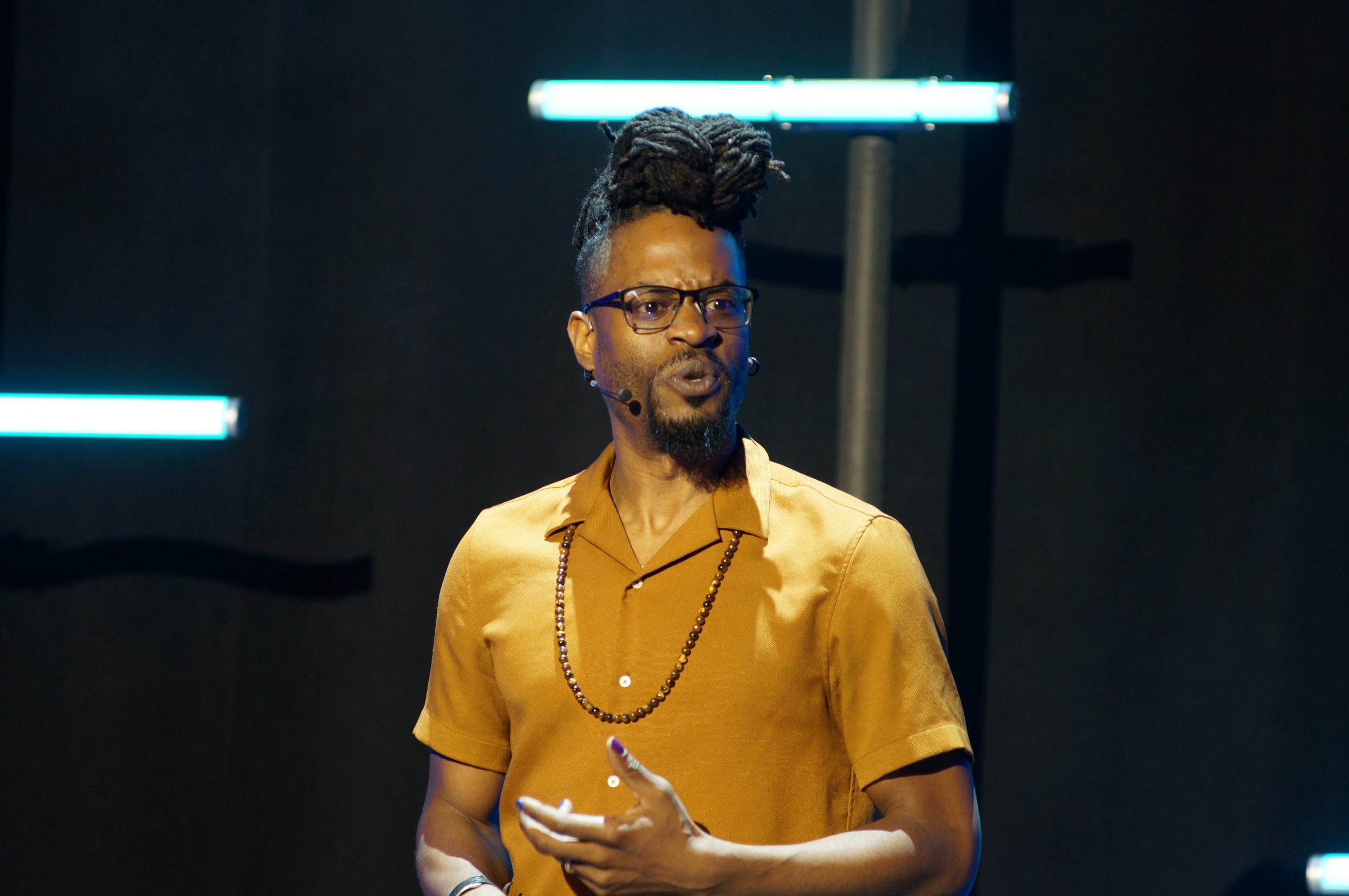
“You have to actively engage with the (creative) muscle, and keep those cogs turning,” he said. “You need time to throw the ball against the wall to innovate.”
Kennedy largely echoed those sentiments, emphasizing the tendency of modern corporate culture to create unnecessary “commotion,” rather than motion, prioritizing speed and efficiency over digging into complex problems.
She argued that operating in this “frenzied” environment hampers ingenuity and long-term growth. She cited companies’ increasing focus on technology integration to free up time and allow for multitasking.
“The more time we’ve ‘saved,’ the less we’ve ended up having,” she said. “We’re not broken, our operating system just needs a major, major upgrade.”
To close the event, Brandon underscored elements he said give Madison a competitive edge compared to its peer cities, including its low rate of unemployment, ranking 13th among 289 others across the U.S. and its footholds in the fusion, quantum and biotech industries.
Madison must “build the disruptive industries of the future without disrupting our workforce,” he said, adding, “What we build together is built to last.”

